


Hand-Engraved Monograms: A Southern Tradition
- Posted on
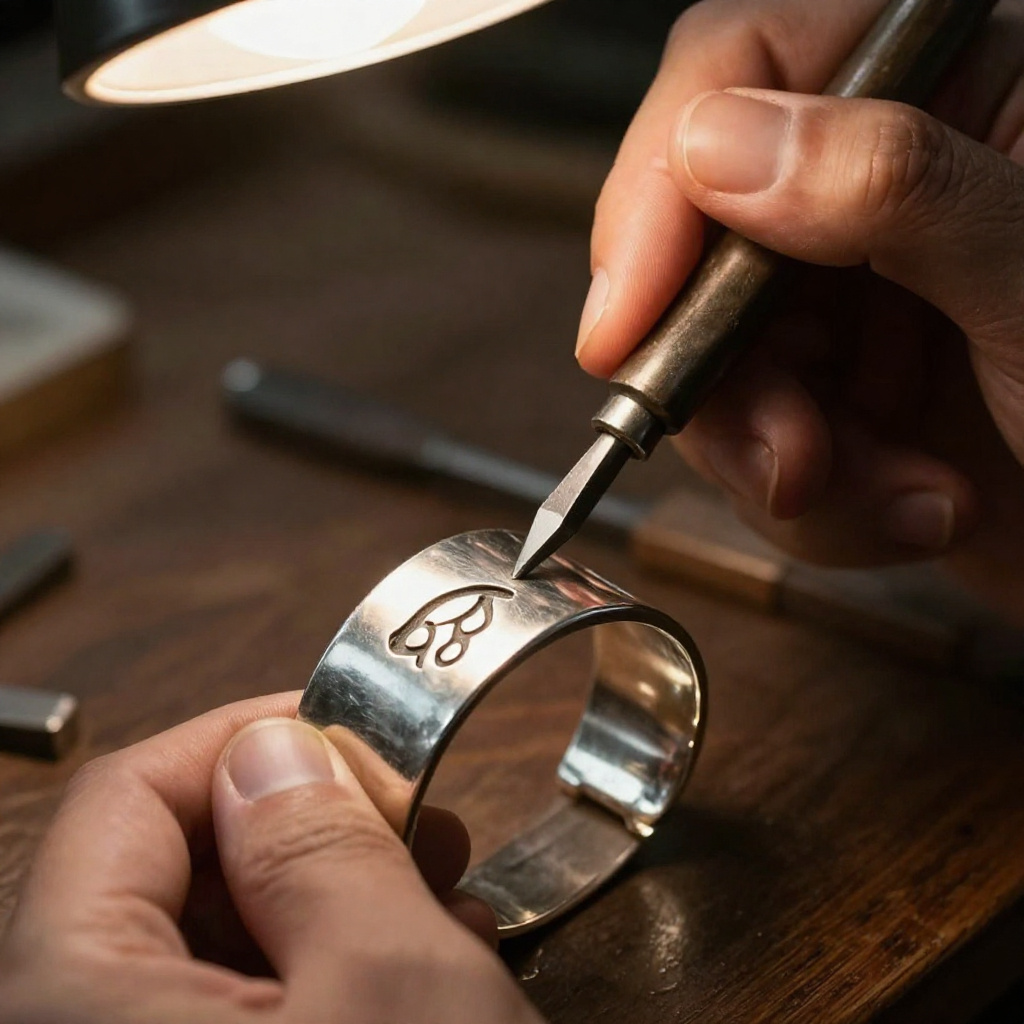
In the South, a monogram isn't decoration. It's a claim. It says the item belongs to someone specific, made to last, meant to be passed down. And in Charleston, where craft traditions run deep, from the ironwork on the gates to the sweetgrass in the baskets, hand-engraved jewelry has been part of that language for generations.
Hand-engraved jewelry has seen a significant resurgence in recent years, but in the South it never really went anywhere
Where the tradition comes from
Monogramming in the American South has roots that predate the Civil War. Families of means marked their silver, their linens, and their stationery with initials as a way of establishing identity and ownership across generations. It was practical, yes, but it was also a statement of permanence. A monogrammed piece wasn't bought for a season. It was made to outlast its owner.
Charleston was particularly fertile ground for this tradition. The city built its identity on skilled trades: silversmiths, blacksmiths, carpenters, and woodworkers who turned raw materials into objects that were meant to endure. The ironwork on the historic gates along East Bay Street wasn't assembled; it was forged by hand, bent, and shaped by craftspeople who understood that the quality of the line reflected the quality of the maker. That same sensibility carried into jewelry.
A monogram cut by hand into gold or silver carries that history. It's a small thing, a few square inches of metal, but the craft behind it belongs to a much longer story.
What hand engraving actually is
Most people use the word "engraving" to describe any mark on a piece of jewelry. But there's a real difference between hand engraving and what machines or lasers produce, and it matters more than most buyers realize.
In hand engraving, the artisan uses small steel tools called gravers to cut directly into the metal. The maker's hand entirely controls the depth, pressure, angle, and movement of each line. As they work, a skilled engraver reads the metal and adjusts for grain, hardness, and the natural movement of the tool. No two lines are exactly identical. The finished piece has subtle variation that a machine simply cannot replicate.
Laser engraving and machine engraving work differently. They produce marks of uniform depth and character, clean and consistent but flat. There's nothing wrong with them for certain applications. But a laser-cut monogram has no authorship. It looks like it could have been made for anyone, because in some sense it was.
A hand-engraved monogram looks made for one person. Because it was.
Why it matters for monograms specifically
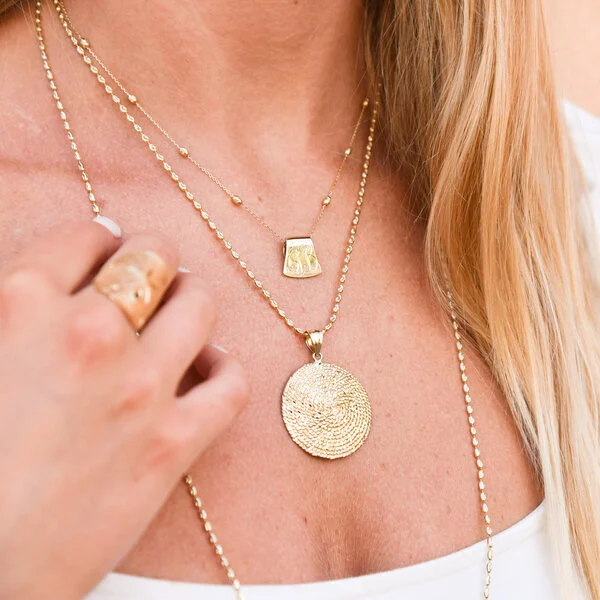
A monogram is already a personal thing. It's a set of letters that belong to one individual. So the method used to put it into metal should carry some of that individuality too.
Hand engraving deepens over time in a way that changes how a piece looks. The cut lines catch light differently than the surrounding metal surface. As the piece is worn and gently polished with age, those lines develop character, a little more depth, and a little more contrast. A well-engraved monogram on a 14k gold piece often looks better at twenty years than it did on day one.
Machine-cut marks don't do this in the same way. They can fade and flatten. The same aging process that adds depth to a hand-engraved piece can make a laser-etched one look worn out rather than worn in.
For a piece given at a milestone, a wedding, a significant birthday, or a christening, that difference over time is the whole point.
The occasions that call for it in Southern culture
The South has always had a specific vocabulary for monogram gifts and which occasions call for them.
Weddings are the most obvious. A monogrammed piece given at a wedding, whether it's a pendant for the bride, a cufflink set for the groom, or a gift from the couple to a member of the wedding party, is a marker of the day. It should last as long as the marriage.
Debutante presentations, though less common than they once were, still carry the tradition in parts of the Deep South and in Charleston specifically. A monogrammed piece given at a debutante occasion is typically chosen to be worn for decades, not a season.
Christenings and baptisms have long included monogrammed jewelry as the gift of record. A piece given to a child at birth or shortly after carries a different weight than almost any other gift; it's meant to outlast the giver.
Graduations and significant birthdays, particularly milestone decades, are also occasions where the tradition holds. A 50th birthday gift in gold with a hand-engraved monogram says something that a generic piece simply can't.
What these occasions share is permanence. They're markers of a life, not a moment. The jewelry given to them should hold up to that weight.
Reading a Southern monogram
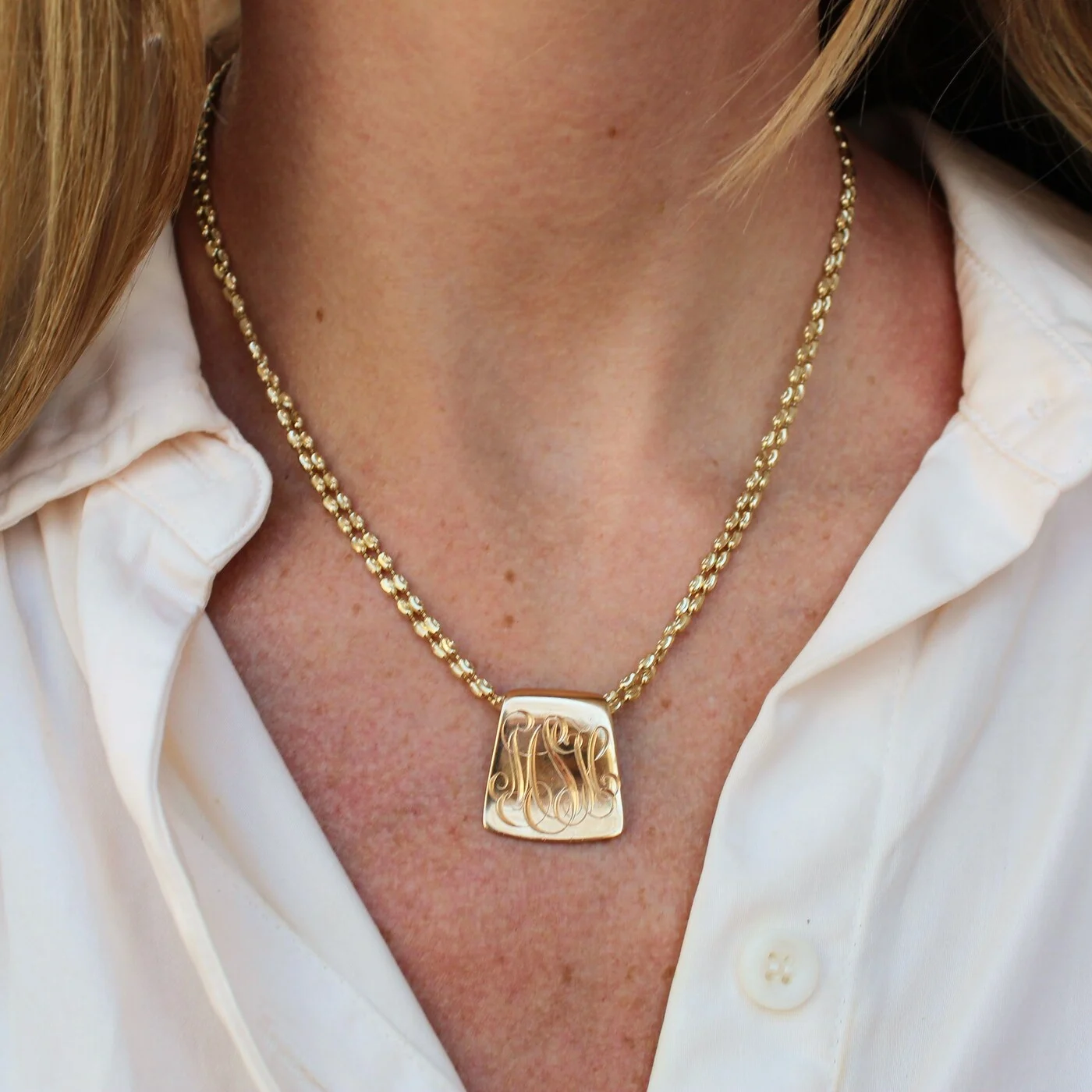
For anyone new to the tradition, the standard three-letter monogram puts the last name initial in the center, larger than the two flanking it. First name initial on the left, middle name initial on the right. For Mary Ann Smith, the monogram reads M-S-A, with S prominent.
For a married woman, the arrangement shifts: her first initial on the left, the shared last name initial centered, her husband's first initial on the right.
A single bold initial, whether the first or last name, is always acceptable, especially when the design calls for simplicity. Some pieces wear a single letter better than three.
The monogram jewelry collection at Gold Creation shows several formats side by side, which makes it easier to see how different arrangements read in actual metal before committing to one.
The craft behind the piece
Not every jeweler who sells engraved pieces engraves them in-house. Many send pieces out to third-party engravers or offer only laser engraving under the broader label of personalization.
At Gold Creation, hand engraving has been part of the studio's work since the beginning. The technique is the same one used by the craftspeople who marked the silver and gold of Charleston households for generations: controlled, deliberate, and cut by hand. If you want to understand more about how the process translates into a gift decision, the guide to hand-engraved jewelry gifts walks through what to look for and what questions to ask before you buy.
The tradition is real. The craft is specific. And the piece that comes out of it is one that carries both.
FAQ
Is engraved jewelry still in style?
Hand-engraved jewelry has grown steadily in demand, up significantly over the past several years. The broader trend toward personalized, meaningful jewelry over fast-fashion pieces has brought it back into focus. In the South, it never fell out of style to begin with.
What is the difference between etched and engraved jewelry?
Etching removes only the surface layer of a metal, leaving a shallower mark. Engraving cuts deeper into the metal, removing material and leaving a more defined line with greater visual contrast. Hand engraving goes further still; the depth, angle, and character of each line are controlled by the maker, producing results no chemical etch or machine process can replicate.
What's the difference between a monogram and engraving?
A monogram is a set of initials arranged in a specific pattern, typically three letters with the last name initial centered and enlarged. Engraving is the process used to cut that monogram, or any other design or text, into the surface of a piece. A monogram can be engraved, stamped, or applied in other ways. Hand engraving is simply the most personal method.
What to write on engraved jewelry?
For a monogram piece, the initials and their arrangement say enough. For other engravings, inside a ring band, on the back of a pendant, shorter is almost always better. A date, a two- or three-word phrase, or a set of initials reads more powerfully than a full sentence. The constraint of the metal is a useful discipline: if it doesn't fit cleanly, it probably doesn't need to be there.
Does engraved jewelry lose value?
For resale purposes, yes, a personalized piece is harder to sell because the monogram limits who would buy it. But for a gift or a personal piece, that framing misses the point. A hand-engraved monogram in solid gold doesn't depreciate in any way that matters to the person wearing it. The value is in the wearing, not the reselling. For timeless jewelry gifts that hold their personal value over decades, a hand-engraved monogram piece is among the strongest choices.