


Gold Filled Jewelry Explained: A High-Quality Alternative to Solid Gold
- Posted on
Gold jewelry has a timeless appeal, but not everyone wants (or needs) the cost and maintenance considerations that come with solid gold. That’s where gold-filled jewelry comes in. It’s often misunderstood, sometimes confused with gold plating, and frequently underestimated. In reality, gold-filled jewelery can be a beautiful and practical choice for everyday wear, providing the look and feel of gold without the need to invest in solid gold.
This guide breaks down what gold-filled is, how it's made, how it compares in the gold-filled vs. solid gold conversation, and what to expect for longevity, care, and quality, especially when you see "14k gold-filled" on a tag.
What Is Gold Filled?
What is gold-filled? Gold-filled is a jewelry material made by bonding a thick layer of real gold to a base metal core (commonly brass). The gold layer is mechanically bonded, typically using heat and pressure, so it becomes a durable outer surface rather than a thin wash of color.
Gold-filled is regulated in the U.S. When an item is properly marked "gold filled," it generally means the gold layer is a significant portion of the item's total weight. That thickness is the reason gold-filled has a reputation for holding up far better than gold-plated in normal wear.
What "14k Gold Filled" Means
"14k gold-filled" refers to the karat value of the gold layer bonded to the core. Fourteen-karat gold is 58.3% pure gold, blended with other metals for strength and color. The "14k" tells you the gold surface you see and touch is genuine 14k gold, not a gold-colored alloy.
Because the outer layer is real gold, gold-filled jewelry tends to look more like traditional gold jewelry than many plated alternatives, and it can develop a warm, familiar glow with wear.
Gold Filled vs. Gold Plated: What's the Difference?
The most common confusion is gold-filled vs. gold-plated. Both involve a base metal with gold on top, but the amount of gold and the method used are very different.
• Gold-plated jewelry typically has a very thin layer of gold applied by electroplating. That layer can wear off more quickly, especially on rings, bracelets, and other high-friction pieces.
• Gold-filled jewelry has a much thicker layer of gold that is bonded to the base metal. It's designed to be significantly more durable and longer-lasting in everyday conditions.
If you're trying to choose between the two, gold-filled is often the better pick when you want a piece you'll wear frequently and you don't want to baby it.
Gold Filled vs. Solid Gold: How Do They Compare?
In the gold-filled vs. solid gold discussion, the key difference is what the piece is made of all the way through.
• Solid gold (like 14k or 18k solid gold) is a gold alloy throughout the entire item. It can be polished and repaired repeatedly over decades, and it holds intrinsic metal value.
• Gold-filled has a core metal with a thick layer of real gold on the outside. It delivers the look of gold and strong wearability, but it does not have the same lifetime repair potential or melt value as solid gold.
Solid gold is the heirloom standard, especially for pieces meant to last generations or for items that see heavy daily wear (like a wedding band). Gold-filled is a smart alternative when you want a high-quality appearance and durability at a more accessible price point.
Is Gold-Filled Jewelry Good Quality?
Is gold-filled jewelry good quality? It can be, very much so, when it's made correctly and cared for reasonably. Gold-filled jewelery occupies a unique position: it features real gold on the exterior, is durable enough to withstand wear, and is generally more cost-effective than solid gold.
Quality, however, also depends on craftsmanship: secure clasps, well-finished edges, strong solder points, and excellent design choices matter just as much as the material. A well-made gold-filled chain or bracelet should feel smooth, balanced, and sturdy, without sharp edges or flimsy components.
Gold Filled Jewelry Benefits
Here are some of the most appreciated gold-filled jewelry benefits for everyday buyers:
• Real gold surface that looks like traditional gold jewelry.
• Better durability than plating for regular wear.
• More budget-friendly than solid gold, making it easier to build a collection.
• Great for meaningful styles you want to wear often—like classic chains, charms, and heritage-inspired designs.
• Lower maintenance than you might expect when cared for properly.
How Long Does Gold-Filled Jewelry Last?
How long does gold-filled jewelry last? Lifespan varies by gold layer thickness, piece construction, and wear. That said, gold-filled jewelery is known to last for years with normal use, especially compared to typical gold plating.
Factors that influence longevity include:
• Wear frequency: daily wear naturally causes more friction than occasional wear.
• Contact points: bracelets and rings experience more rubbing than earrings or pendants.
• Chemical exposure: lotions, perfumes, chlorine, and cleaning products can dull the finish over time.
• Storage habits: pieces tossed in a drawer tangle and scratch more than pieces stored separately.
Many people find that gold-filled holds up beautifully for everyday necklaces and earrings. For items that take more impact, like bracelets, you can extend life significantly by removing them for swimming, workouts, and cleaning.
Will Gold-Filled Tarnish or Turn Your Skin Green?
Gold-filled contains real gold on the outside, so it generally resists tarnish better than many fashion metals. Still, the underlying core metal is not gold, and over time the surface can show wear depending on use and care.
As for skin discoloration: skin turning green is usually a reaction to copper alloys and moisture. With gold filling, the gold layer serves as a barrier. Most wearers don't get discolored if the layer is intact. If a piece is heavily worn in high-friction areas, the gold layer can thin in spots, increasing the chance of reaction for sensitive skin.
If you have very sensitive skin, it's wise to choose well-made, gold-filled jewelery and avoid exposing it to sweat and harsh products. When in doubt, a higher-wear piece in solid gold or sterling silver may be the better long-term solution.
Gold Filled Rice Beads: A Charleston Classic in an Everyday Material
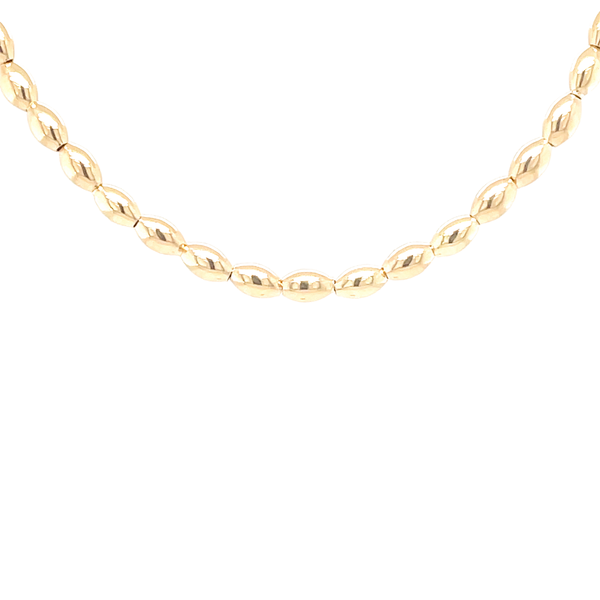
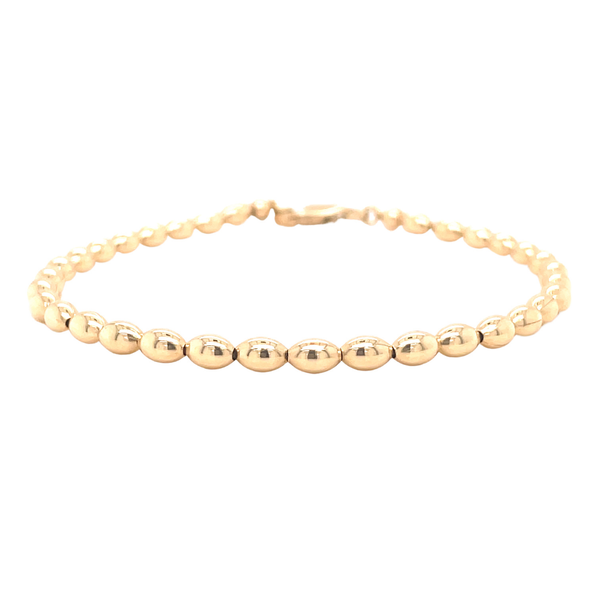
Charleston has a long love affair with rice beads, an iconic style inspired by Lowcountry history and coastal heritage. Today, gold-filled rice beads offer a way to enjoy that classic look in a material designed for frequent wear, gifting, and collecting.
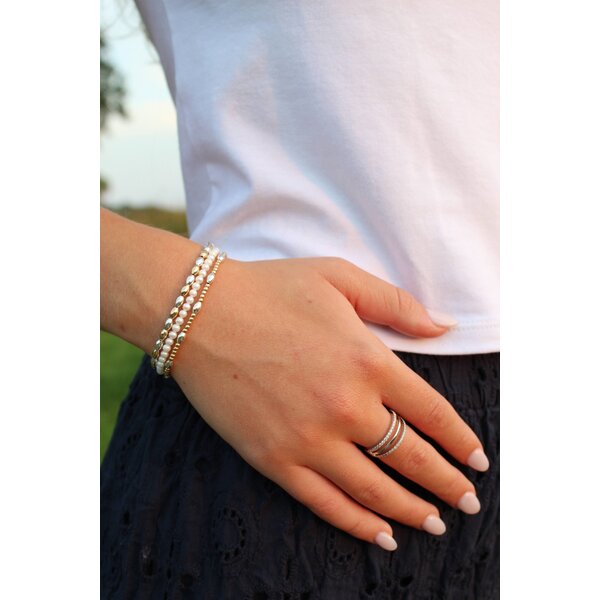
Because rice bead jewelery is often worn as a "go-to" piece that is layered, stacked, and reached for daily, gold-filled jewelery can be an ideal match: it delivers the warm look of gold with durability that outperforms typical plating.
• Yellow Gold Filled Charleston Rice Bead Necklace
• Yellow Gold Filled Charleston Rice Bead Bracelet
• GF/SS Triple Rice Bead Bracelet
• Charleston Rice Beads Collection
If you're choosing rice beads as a keepsake from a trip, a graduation gift, or a piece to wear as a daily reminder of Charleston, gold-filled can be a practical way to keep that meaning close without reserving it only for special occasions.
How to Care for Gold-Filled Jewelry
Gold-filled jewelry doesn't require complicated upkeep, but good habits make a noticeable difference, especially if you want the piece to look bright for as long as possible.
Everyday Care Tips
• Put jewelry on last after perfume, hairspray, and lotions have dried.
• Remove before swimming (especially in chlorine), showering, or using cleaning chemicals.
• Wipe after wear with a soft cloth to remove oils and residue.
• Store separately to prevent scratches and tangling, ideally in a soft pouch or lined box.
Cleaning Gold Filled the Safe Way
For most pieces, gentle cleaning is best. Use lukewarm water, a small amount of mild soap, and a soft cloth. Rinse and dry thoroughly. Avoid harsh dips, abrasive cleaners, and aggressive polishing compounds; these can wear the gold layer prematurely.
For a more detailed overview, see the Jewelry Care Guide.
How to Shop Smart: What to Look for in Gold-Filled Jewelry
Not all gold-filled jewelery is the same quality. If you want a piece that truly delivers on durability and appearance, here are practical shopping considerations.
1) Check the Marking
Gold-filled pieces are often stamped with markings such as "14/20 GF" or "1/20 14K GF." This indicates the karat of the gold layer and its proportion to weight. While not every small component can be stamped, clear labeling is a good sign of transparency.
2) Pay Attention to High-Wear Areas
Clasps, jump rings, and extender chains take a lot of stress. A quality piece uses sturdy findings that are properly closed and finished. If you're buying a bracelet or anklet you plan to wear daily, durability of the construction matters as much as the gold layer.
3) Consider the Type of Piece
• Great candidates for gold-filled: necklaces, pendants, earrings, charm jewelry, many bracelets.
• Consider solid gold for wedding bands, daily rings, and pieces you expect to resize frequently or pass down for generations.
4) Know Your Lifestyle
If you're hard on jewelery, frequent workouts, swimming, or hands-on work, gold-filled can still work, but you'll want to remove it more often. If you prefer to never take jewelry off, solid gold may be the better long-term fit for the pieces you wear 24/7.
Common Questions About Gold-Filled Jewelry
Does gold-filled look like real gold?
Yes. The outer layer is real gold, so the appearance is closer to traditional gold jewelry than gold-colored fashion metals. The exact look can vary by karat and finish, but 14k gold-filled is a classic, wearable tone.
Can gold-filled items be polished?
Light buffing with a soft cloth is fine. Heavy polishing or abrasive compounds are not recommended because they can wear down the gold layer over time. When cleaning is needed, gentle methods are safest.
Is gold-filled material waterproof?
It's more resilient than plating, but "waterproof" is not a great way to think about jewelry. Water alone is less of an issue than what comes with it: chlorine, salt, soap, and chemicals. Removing gold-filled jewelry before swimming and showering helps preserve its finish.
Is gold-filled better than sterling silver?
They're different. Sterling silver is a precious metal alloy throughout and can last a lifetime with maintenance, but it may tarnish and needs regular polishing. Gold-filled offers a gold look with strong wear resistance and usually less visible tarnish. The better choice depends on the color you prefer, your skin sensitivity, and how you like to care for your jewelry.
The Bottom Line
Gold-filled jewelry is one of the best options for shoppers who want genuine gold on the surface, a durable everyday finish, and a price that's typically more approachable than solid gold. Understanding gold-filled vs. gold-plated clears up most of the confusion: gold-filled is made with a much thicker layer of real gold, designed to last.
In the ongoing gold-filled vs. solid gold comparison, solid gold remains the forever standard for heirloom value and long-term repairability. But if you're seeking a high-quality alternative, especially for meaningful, frequently worn styles like gold-filled rice beads, gold-filled can be a practical and beautiful choice that fits real life.